
Top Signs You Need Garage Door Service – Don’t Ignore These
A garage door that takes three seconds longer to close than it did six months ago isn’t “settling” – it’s a worn torsion spring losing tension, and it’s closer to snapping than you think. Most garage doors don’t fail without warning. They telegraph the problem for weeks through sounds, speeds, and gaps that homeowners attribute to weather or “just how the door is.” The signs below are the specific mechanical signals that mean a component is close to failing, not just aging. If you’d rather not climb a ladder to investigate, call (866) 254-2156.
What are the first signs a garage door needs service?
The earliest reliable sign is a change in how the door moves. Garage doors are counterbalanced systems: springs carry the weight, cables keep the door level, and rollers ride in tracks. When any of those parts starts to wear, the door’s motion changes before anything visibly breaks. In our experience, homeowners notice the difference in feel long before they notice a part. Watch for these early signals in Cambridge:
- The door feels heavier when you disengage the opener and lift it by hand. A properly balanced door lifts with one hand and stays put halfway up. If it drops or takes real effort, the springs are losing tension.
- The door reverses or stops partway. Usually a travel-limit or safety-sensor issue, but sometimes a sign the opener is straining against a mechanical problem underneath.
- The door hesitates before it moves. That half-second pause at the start of travel often means the opener motor is working harder than it should.
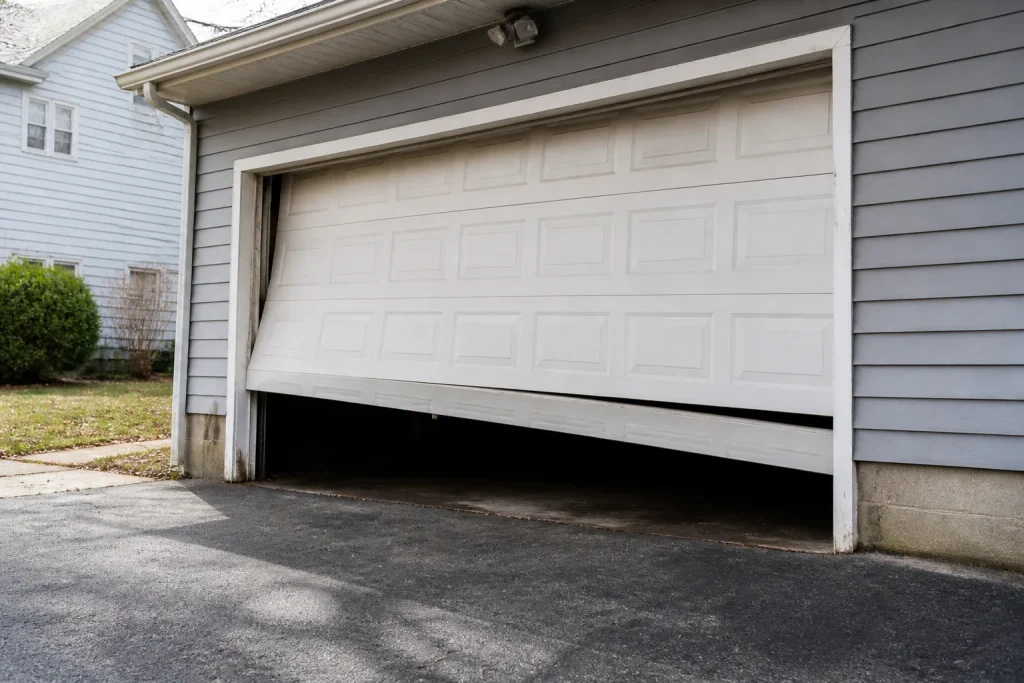
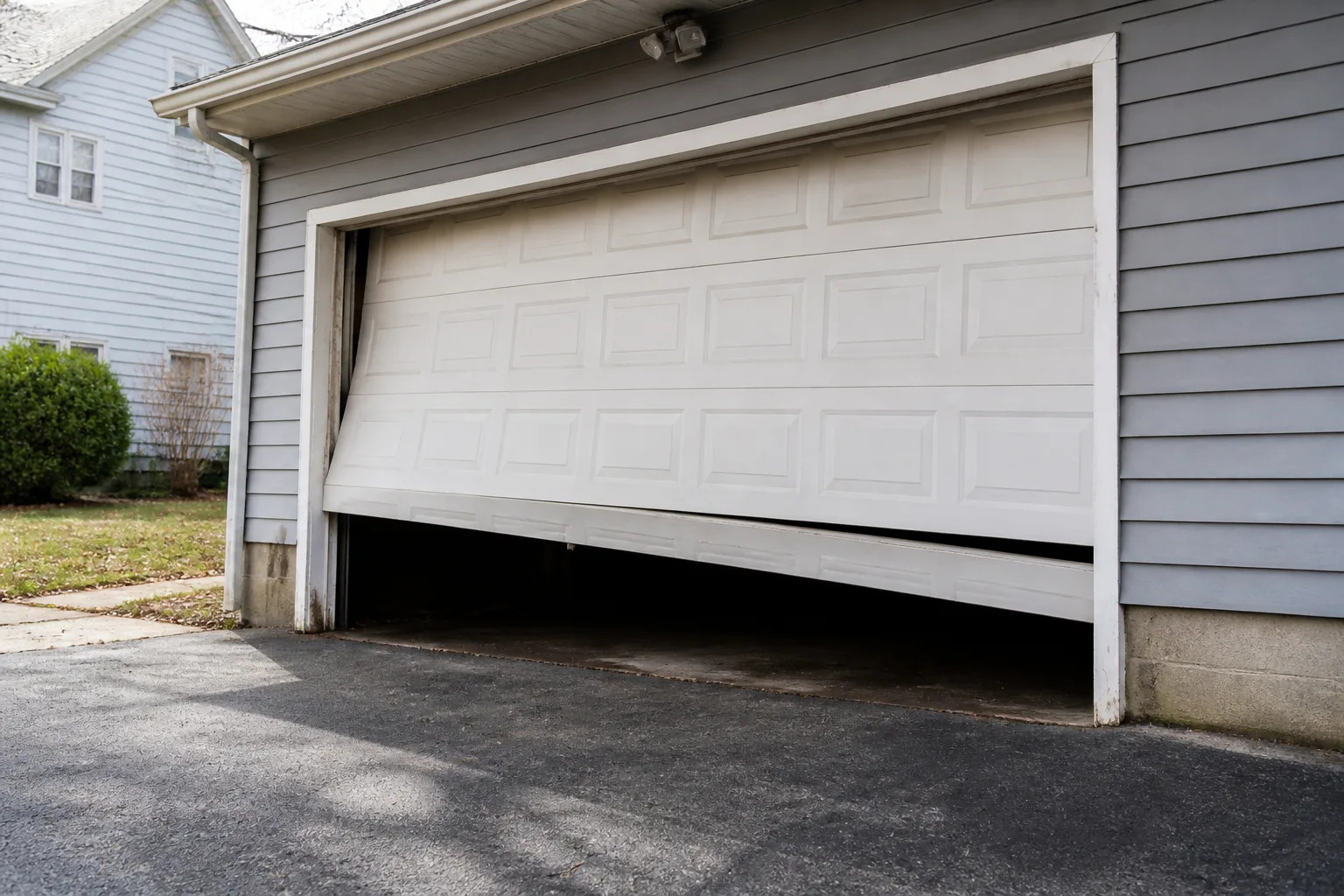
- A gap appears at the bottom or one corner. The door is no longer sitting square in the opening, which points to a cable or track problem.
- The opener light flickers or the motor sounds strained. The opener is a symptom here, not the cause. Something in the door system is dragging.
None of these mean the door is about to fall. But each one means a part is past its service life, and the repair is smaller now than it will be in a month. Recognizing them early is the difference between a tune-up and a breakdown.
The click, the pop, and the grind: what each sound tells you
Sounds are the most accurate diagnostic tool a homeowner has, because each noise maps to a specific mechanical fault. When you call us, describing the sound accurately saves time and gets the right parts on the first visit. Here’s the distinction:
- A rhythmic click or tick as the door moves. Usually roller wear. The roller bearing has dried out or flattened, and the steel stem is knocking inside the hinge. New rollers are cheap; ignoring a worn roller wears the hinge and eventually the track.
- A sharp pop or bang from one side during operation. Often track misalignment or a hinge pulling loose from the door panel. The door is shifting and pulling against the track. Left alone, this damages the panel and the cables.
- A grinding or scraping sound. Metal-on-metal contact, typically a bent track, a broken roller, or the door panel rubbing the frame. Grinding gets worse fast; don’t wait on this one.
- A loud bang from above the door, followed by a door that won’t open. A torsion spring or a cable has failed. Stop operating the door. Springs and cables are under extreme tension and can injure anyone nearby, which is why we treat garage door spring repair as specialist work and never recommend handling it yourself.
- A rattle or squeal from the opener housing. The opener gear or the chain/belt drive is the source. Your brand matters here – a Genie opener and a Wayne Dalton door system have different service procedures, and we know both.
When you call, say “grind,” “pop,” or “bang” and which side it comes from. That’s the most useful information you can give a technician.
Why uneven movement means a cable is fraying
If one side of the door rises slightly faster than the other, or the door visibly tilts as it opens, the cables are no longer carrying the door evenly. That’s a cable problem, and it is not a symptom to wait on. The two cables on a garage door run under high tension and are what keep the door level and attached to the springs. A frayed cable has lost strands; it’s holding less load than it should.
Uneven movement in Cambridge usually shows up in one of three ways:
- The door tilts by an inch or more at one corner. The more slack cable is on the tilting side.
- The door hangs crooked when closed. Check the gap at the floor. An even sliver all the way across is normal; a wedge on one side is not.
- A cable looks loose, kinked, or visibly frayed. Frayed wire is a hard stop. Don’t cycle the door until a technician looks at it.
A cable that fails while the door is moving can drop a panel and damage the door frame, the opener, and whatever is in its path. It’s also one of the few garage door parts that can genuinely hurt someone. Keep this one on the diagnostic list, not the to-do-later list. A specialist can inspect a cable in a few minutes and confirm whether it needs replacement.
The Cambridge cold-weather variable: why November through March is the season to watch
Garage door problems accelerate in cold weather, and in Cambridge the stretch from November through March does the most damage to the components that were already tired. Here’s the local variable: metal contracts in cold, lubricants thicken, and the steel in springs, cables, and rollers becomes more brittle. A door that rolls smooth in July may start groaning in January – and it isn’t the door “changing its mind.” It’s the same wear, exposed.
That leads to a common misdiagnosis. A homeowner finds the door struggling in winter and instead of calling, keeps it on a 15-amp breaker until spring. June arrives, the door works again, and the problem goes unfixed until it fails at the worst time. In our experience, the door didn’t fix itself over the winter; it simply cycled less in the cold, and the worn part never got better. We’d rather see it in December than have it strand a car in July.
Cold-weather checks worth doing before the first hard freeze:
- Cycle the door and listen for a change in sound from the fall.
- Look at the springs above the door for rust, thinning, or gaps between coils.
- Test the opener’s auto-reverse by placing an object in the door’s path. If it doesn’t reverse, the safety system needs attention before the cold season.
- Wipe the tracks of debris and lubricate hinges and rollers with a garage-door-rated lubricant. Avoid heavy grease in cold weather; it stiffens and added drag becomes a real problem.
If you want a professional opinion on a door that’s been “fine in summer,” that’s what we do. Cambridge doors get a real workout in winter, and a pre-season look costs little compared to a mid-winter repair.
Rust on springs versus surface oxidation: how to tell the difference
Look at the springs above your door. All garage door springs rust eventually, but there’s a difference between harmless surface oxidation and the rust that signals a spring on its way out. In Cambridge, road salt tracked home on the car and stored in an attached garage accelerates corrosion on any metal part near the floor, and moisture in an unheated garage works on the springs through the winter. Our region’s snow and salt can be tough on springs.
Here’s how to read it:
- Surface oxidation. A thin, even, reddish or brown film across the coils. The spring has a patina but the shape is intact and the coils are evenly spaced. This is cosmetic and typical of age.
- Corrosive failure. Deep pitting, flaking, or visible thinning of the wire. A spring that has actually lost material is close to the end of its life. If you can see daylight through a gap between coils when the door is closed, that gap is not a design feature.
The other pattern to know: a spring doesn’t always snap loudly. Sometimes it breaks quietly overnight, and the first sign is a door that won’t open in the morning. If the door is dead, don’t force it. Call us. You can read more about how we handle garage door repair on our main service page, and a technician can confirm what failed in a single visit.
Opener strain: the secondary symptom most homeowners miss
A strained opener is almost always a symptom, not the disease. The motor is the last part in the chain: springs carry the door, cables balance it, rollers and tracks guide it. When any of those degrade, the opener pulls harder than it was designed to, and the motor tells the story first. You might notice:
- The opener sounds louder than it used to.
- The motor housing is unusually warm after the door cycles.
- The opener reverses for no obvious reason mid-travel.
- A chain or belt that’s slapping or squealing.
- The door stays put for a beat before it moves.
Here’s the trap: when the opener struggles, the temptation is to replace the opener. That’s usually the wrong part. A new LiftMaster or Chamberlain installed on a door with worn springs or a misaligned track will strain just as much as the old one did. The right first step is garage door opener repair diagnosis on the opener and a look at the mechanical system below it. Brands like Clopay and Amarr have their own weight and balance characteristics, and a technician who knows your brand should test the door’s balance before touching the opener. If you’ve already had an opener replaced and the door got louder, not quieter, this is likely why.
When to call a pro
If you’ve read this far and recognize one of these signs, the answer is now. The short list of signals that call for a specialist:
- A loud bang from the springs or a door that won’t open at all.
- A frayed cable, a door that hangs crooked, or one that tilts as it moves.
- Deep pitting or flaking on the springs.
- Any door that reverses, grinds, or scrapes consistently.
Springs and cables are under high tension and can cause serious injury. We recommend a trained professional, and we don’t publish DIY steps for those parts for good reason. Our technicians have up to 11 years of experience, and those years are concentrated on garage doors. We know your Genie or LiftMaster opener cold, and we know what a worn spring sounds like over the phone.
Related services in Cambridge: If you’re not sure what your door needs, our specialists cover everything from the initial garage door service visit through to full replacement.
The Bottom Line
Garage doors are honest machines – they signal trouble through sound, speed, balance, and rust well before a part fails. The three most important takeaways: first, uneven movement or a door that tilts means a cable problem, and that’s a call-today sign. Second, cold weather exposes worn parts rather than causing them, so a door that’s “fine in summer” may just be waiting for the right conditions to fail. Third, opener strain is usually a symptom of a mechanical problem underneath the motor, not a reason to replace the opener.
If you’re in Cambridge and something on this list sounds familiar, we’re happy to look. Cambridge Garage Door Repair Pros specializes in garage doors – repair, opener repair, spring repair, and installation – and our technicians know the major brands, from LiftMaster and Chamberlain to Clopay, Amarr, Wayne Dalton, and Raynor, inside and out. We answer 24/7. Fast dispatch from 7am to 7pm, Sunday through Friday. A free estimate is always part of the first conversation, and the price is quoted and agreed before any work starts. Call (866) 254-2156.
Frequently Asked Questions
The clearest sign is a door that won’t open at all, or one that feels extremely heavy when you disengage the opener and lift it by hand. You may also find a visible gap in the spring above the door where a coil has separated. If either happens, stop operating the door and call a professional. Springs are under extreme tension and are one of the most dangerous parts of the system to handle.
Some things, yes – track lubrication, visual inspections, and clearing debris are reasonable. But springs, cables, and torsion hardware are not. They’re under high tension and are the parts most likely to cause serious injury when handled incorrectly. An experienced technician has seen enough of them to diagnose the issue quickly and safely. When your door won’t move, we’ll come take a look.
Yes, usually. A door that grinds, pops, or scrapes is telling you a component is past its service life. Worn rollers, a misaligned track, or a strained opener bearing all produce noise before they fail. In our experience, fixing the noise early is cheaper than fixing the failure. Call (866) 254-2156 to have it checked – estimates are free.
Cold weather doesn’t create problems, but it exposes the ones already there. Metal contracts, lubricants thicken, and brittle springs or frayed cables get worse under winter conditions. A door that works in summer can fail in January, and fixing the worn part before the cold hits is usually a smaller repair. We answer 24/7 through the winter. Fast dispatch from 7am to 7pm, Sunday through Friday.
Written by the team at Cambridge Garage Door Repair Pros.
Need Garage Door Help?
Call Cambridge Garage Door Repair Pros - the local pro we connect you with is licensed and insured, here with fast help in Cambridge.
(866) 254-2156