
Last updated November 21, 2026
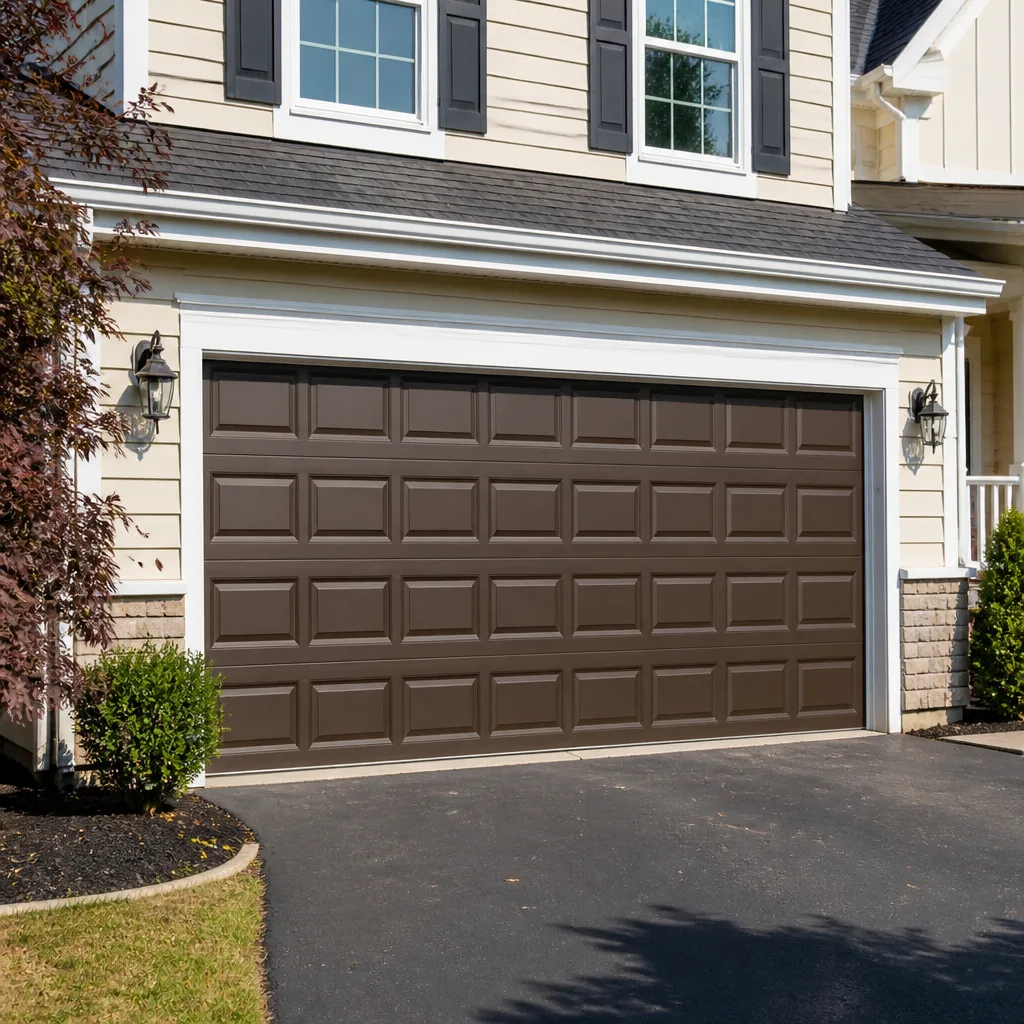 Raised-panel steel
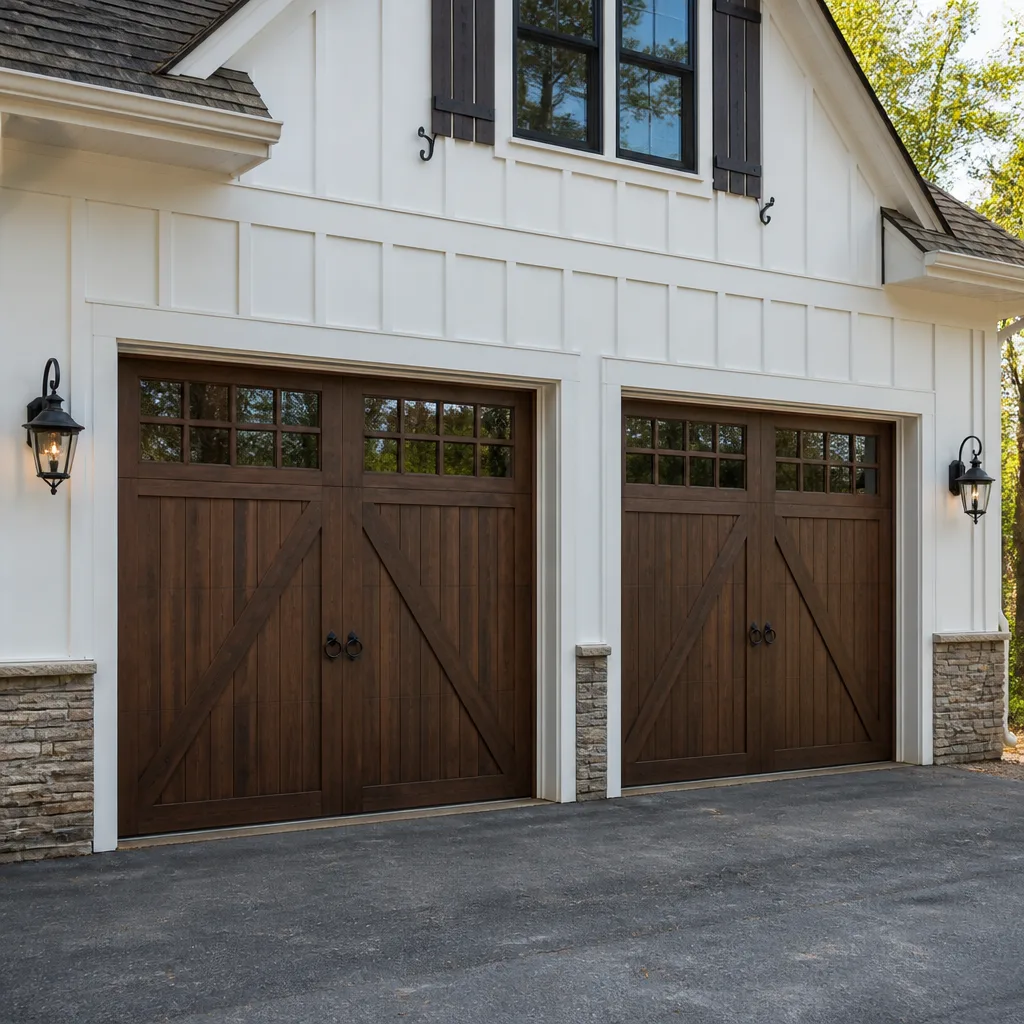 Carriage house
 Modern flush
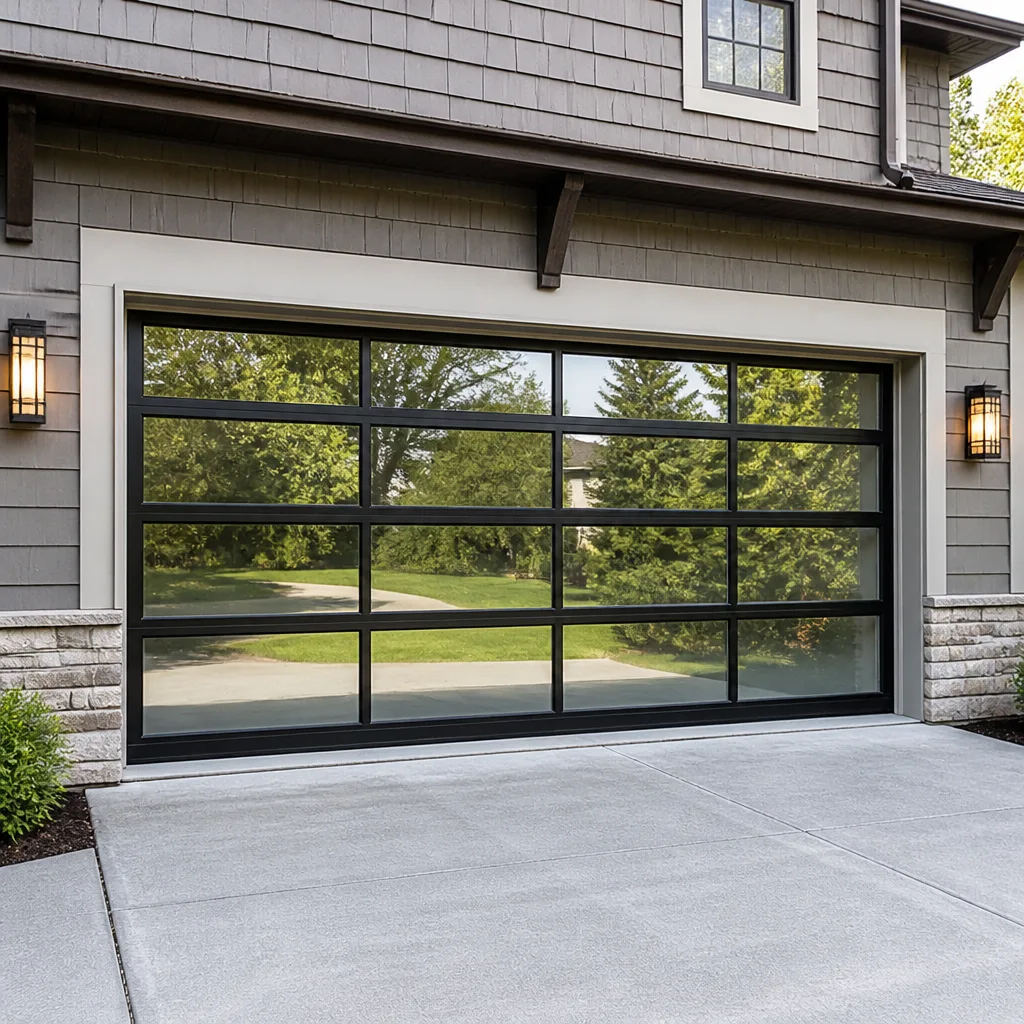 Full-view glass
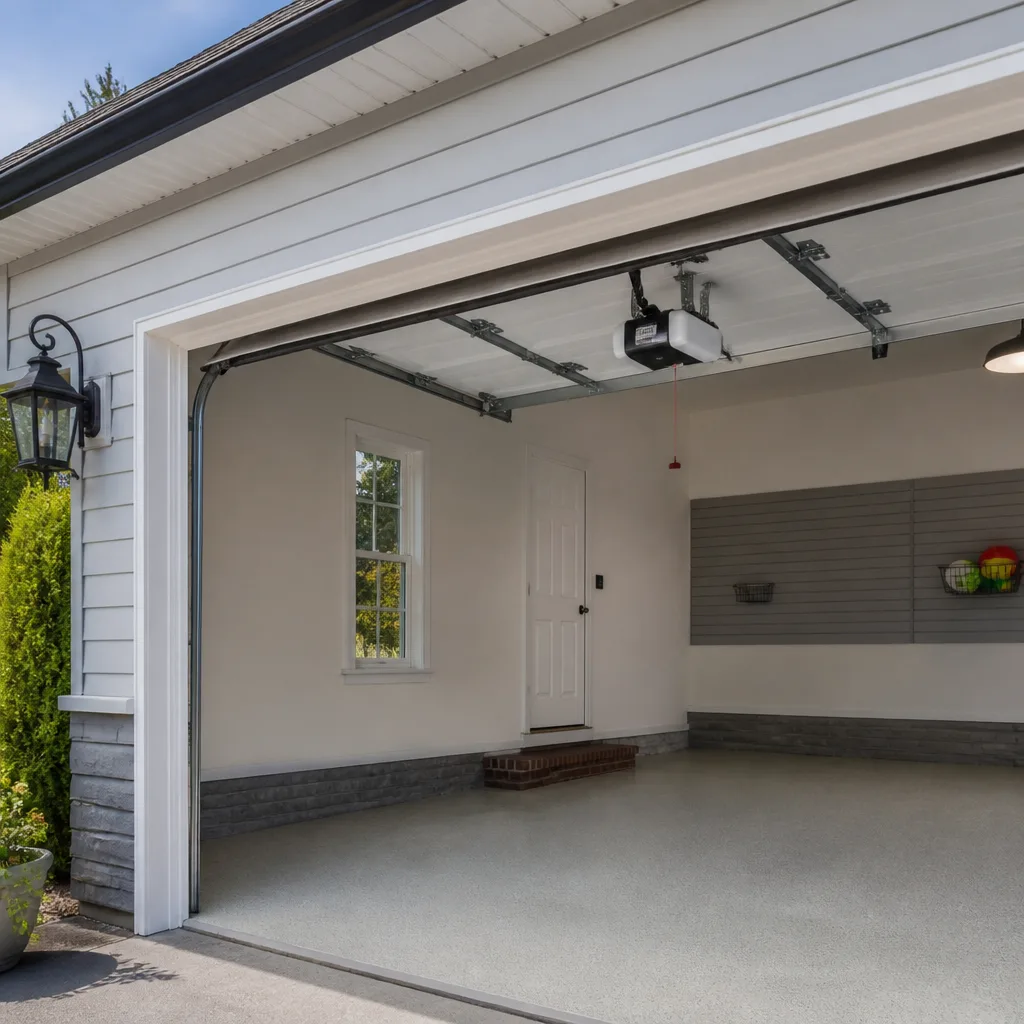 LiftMaster openers
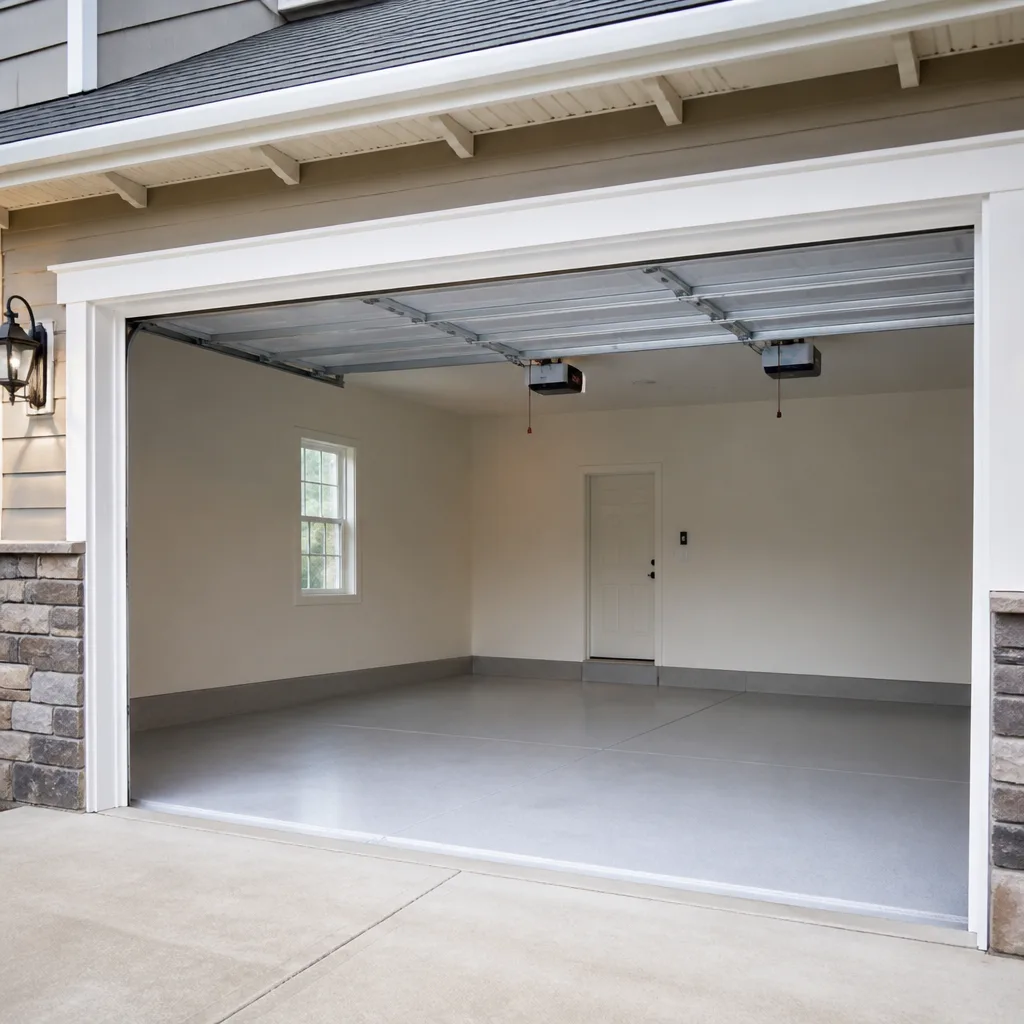 Chamberlain openers
Full 25-point door and opener safety check with every visit - springs, cables, rollers, tracks, and your LiftMaster or Chamberlain opener included
You get a price before we start. It does not change when the pro arrives.
Get your free estimateDIY vs Professional Garage Door: The Cambridge Homeowner’s Decision Guide
Most garage door advice online treats DIY versus professional as a question of confidence. Watch enough videos, buy the right winding bars, and you can handle it yourself. That framing is wrong, and it’s the reason so many spring jobs end with a call to a specialist anyway. The real dividing line isn’t skill. It’s physics. A standard residential torsion spring holds enough stored energy to break a bone or worse if it releases while your hand is near it, and no amount of tutorial-watching changes what’s coiled inside that steel. This guide draws that line clearly for Cambridge homeowners: what you can safely do yourself, what you genuinely cannot, and how Cambridge’s tight garages and older housing stock push several borderline jobs over to the professional side.
Quick Answer
You can safely lubricate hinges and rollers, replace weatherstripping, adjust opener travel limits, and test the auto-reverse function yourself. You should never wind, unwind, or replace a torsion spring, work on cable drums, or realign the tracks of a loaded door. In Cambridge, most residential garages are too tight to position a winding bar safely, so even an experienced DIYer should hand spring work to a specialist. Everything else falls in a middle zone where the written estimate decides.
Styles & brands we work with
- Raised-panel steel
- Carriage house
- Modern flush
- Full-view glass
- LiftMaster openers
- Chamberlain openers
Table of Contents
- Why Physics Draws the Line, Not Skill Level
- What’s Genuinely Safe to Do Yourself
- What’s Not Safe Regardless of Skill Level
- The Cambridge Factor: Why Tight Garages Change the Math
- The True Cost of a DIY Mistake
- How to Use Manufacturer Resources Correctly
- A Decision Framework for Borderline Jobs
- What Brand You Own Matters
Why Physics Draws the Line, Not Skill Level
A torsion spring is a wound steel coil that counterbalances the full weight of your garage door. When the door is down, the spring is under maximum tension. That stored energy is what makes the door feel light enough to lift by hand. It’s also what makes the spring dangerous: when it fails, that energy releases instantly, with no warning and no way to stop it.
Extension springs, common on older doors, run along the tracks and stretch instead of twisting. They carry their own risk and are supposed to be fitted with safety cables, though plenty of Cambridge doors predate that practice. Torsion springs are mounted on a shaft above the door and are the more common setup on anything installed in the last few decades.
Here’s the part most guides skip. The danger isn’t the spring sitting there at rest. It’s the winding process, where you’re deliberately adding or releasing turns with a metal bar. A winding bar can slip. The spring can catch. The bar can kick back with enough force to break a wrist or worse. Professional technicians use two bars, controlled winding sequences, and a trained sense of how much resistance means something is wrong. That last part is the piece you can’t learn from a video, because it’s feel, and feel comes from doing the job hundreds of times.
This is why the DIY line for garage doors is narrower than for almost any other home repair. Painting, tiling, even basic plumbing tolerate a mistake. Spring work doesn’t. If you take one thing from this guide, take this: the spring system is the boundary, and it doesn’t move based on how handy you are.
What’s Genuinely Safe to Do Yourself
A real list exists, and it’s worth knowing cold. These tasks keep your door running smoothly, extend the life of the hardware, and cost you almost nothing in time or parts.
- Lubricate hinges, rollers, and the torsion shaft. Use a silicone or lithium-based garage door lubricant, not WD-40 (which is a solvent, not a lubricant). Apply to each hinge pivot and roller bearing once or twice a year. Wipe off excess so it doesn’t attract grit.
- Replace bottom weatherstripping. The rubber seal at the bottom of the door wears flat and lets in drafts and water. Most seals slide into a channel or fasten with a few screws. Measure the door width, buy the matching profile, and swap it with the door fully open and the opener disconnected.
- Adjust opener travel limits. If the door doesn’t quite close or reverses before it should, the travel limits on the opener are usually off. On LiftMaster and Chamberlain units, the adjustment screws are on the back or side of the motor housing. Nudge them in small increments and test after each change. Never force a limit adjustment to compensate for a door that’s binding.
- Test the auto-reverse function. Place a 2×4 flat on the floor in the door’s path and close the door. It should reverse on contact. Then test the photo-eye safety sensors by waving an object through the beam while the door is closing. If either test fails, stop using the opener and get it looked at.
- Wipe down and inspect. Look for frayed cables, bent hinges, loose bolts, and worn rollers. You’re not fixing these; you’re finding them early so a specialist can.
That’s the safe list. Six months of routine work on a garage door in Cambridge rarely goes beyond these five items. They’re also the tasks that prevent the expensive failures, which is the argument for doing them consistently.
What’s Not Safe Regardless of Skill Level
These are not “harder” jobs. They’re jobs where a mistake causes injury, and the mechanical reason matters more than the warning.
Winding, unwinding, or replacing a torsion spring. The spring stores energy proportional to how many turns it’s wound. To replace it, you must safely release that stored energy first, then rewind the new spring to the correct number of turns. Get the count wrong and the door either won’t balance or the spring overstresses. Get the process wrong and the bar slips. There is no safe DIY version of this, which is why garage door spring repair is a specialty in its own right, and why generalist handymen often decline the job.
Cable drum and cable replacement. The cables run from the bottom corners of the door up to drums on the torsion shaft. The cables are under tension whenever the spring is wound. Loosening a drum or cutting a cable without releasing the spring first can send the cable whipping across the garage. The standard practice is to secure the door, release spring tension with bars, and only then touch the cables. That sequence requires the same equipment and training as spring work.
Track realignment on a loaded door. Track that’s been bumped out of alignment looks like a simple fix with a rubber mallet. But on a door with a wound spring, the track is holding a live load. Loosening the wrong bolt can let the door drop or the spring unwind unpredictably. If the door is off its tracks, stop operating it and call a professional.
Opener motor replacement or force adjustment. The opener’s force setting exists to protect people and property. Raising it to compensate for a binding door defeats the safety system and is a common cause of doors crushing objects (or worse). If your opener needs more force to move the door, the door has a problem, not the opener.
Spring or cable work on any door you can’t fully secure. A door held up by a broken spring, a makeshift prop, or a car parked under it is a door that can fall. That’s an emergency call, not a weekend project.
The Cambridge Factor: Why Tight Garages Change the Math
Here’s where this guide stops being generic. Cambridge’s housing stock is old, its lots are narrow, and its garages reflect that. Many residential garages in neighborhoods like Cambridgeport, Inman Square, and the streets off Massachusetts Avenue were built for a single car with inches to spare. Some are freestanding, some are attached under a second floor, some are shared with a neighbor across a lot line.
Why does that matter for DIY? Spring winding needs room. You stand to the side of the torsion shaft, insert a winding bar into the collar, and rotate. The bar needs clearance to swing through an arc without hitting anything. In a typical Cambridge garage, that arc runs into a wall, a structural beam, a parked car, or a stack of stored items. A technician who works these garages regularly knows how to work within tight clearances and when to reposition the door or use a different approach. A homeowner attempting a spring replacement in a garage with a foot of side clearance is fighting the building itself, and that’s when bars slip.
There’s a second Cambridge factor: older door hardware. Doors installed decades ago on Cambridge homes often use extension springs, non-standard track widths, or opener mounts that predate current standards. Parts for these aren’t always on a shelf, and a DIYer who orders the wrong part has a door that won’t operate until the right one arrives. A specialist who’s seen the equipment before can often identify it on sight and quote the right replacement the first time.
If your door is in a tight Cambridge garage, treat the middle-zone jobs (roller replacement on a drum-heavy door, track adjustments, opener replacement) as professional work. The clearance issue alone shifts the risk enough to justify the call.
The True Cost of a DIY Mistake
The honest comparison isn’t “DIY price versus professional price.” It’s “professional price versus the cost of fixing a DIY attempt that went wrong.” Those are different numbers, and the gap is wider than most homeowners expect.
When a DIY spring attempt fails, the most common outcome is that the door is stuck, the spring is broken or half-wound, and the door may be off its tracks. That’s an emergency call. The technician now has to safely release whatever state the system is in, assess collateral damage (bent tracks, damaged drums, a strained opener), and then do the original job. You pay for the repair you needed plus the cleanup of the attempt. In the worst case, there’s injury on top of that.
There’s also a parts angle. Emergency visits sometimes require a second trip because the right spring size or drum isn’t confirmed until the door is measured. That’s not a markup; it’s the reality of fixing something in a hurry that wasn’t diagnosed in advance. A scheduled spring repair is measured first, quoted in writing, and done in one visit with the right parts.
On the opposite side, routine DIY maintenance genuinely saves money. Lubricating hinges and replacing weatherstripping yourself keeps small problems from becoming big ones at no real risk. That’s the trade: do the cheap, safe maintenance religiously, and reserve the professional budget for the work where a mistake is expensive.
For an apples-to-apples read on what the professional side costs, see our guide to garage door repair in Cambridge, which lays out typical ranges by job type and explains what a written estimate covers.
How to Use Manufacturer Resources Correctly
Chamberlain and LiftMaster publish homeowner maintenance guides, and they’re genuinely useful. The mistake is reading “maintenance guide” as “permission slip.” Here’s how to sort what’s in those documents.
Safe to follow directly: lubrication schedules, weatherstripping replacement, opener travel and force adjustment procedures, safety sensor testing, and the monthly balance test (disconnect the opener, lift the door halfway, and see if it holds; if it drifts, the spring balance is off and you need a professional). If your door uses a LiftMaster or Chamberlain opener, the manual’s troubleshooting section is reliable for basic adjustments and error codes.
Follow only up to the point of calling a technician: anything in the guide that mentions springs, cables, drums, or track adjustment. These sections exist for technicians, and the manufacturer includes them so the information is documented, not so homeowners attempt them. When the manual says “have a trained technician” do something, that’s the boundary, not a suggestion.
Never follow: any instruction to adjust spring tension by turning a collar without a winding bar, or any “quick fix” for a door that’s binding. Binding means something in the system is out of balance, and adjusting the opener force to push through it is the wrong answer regardless of what a troubleshooting chart implies.
One more note on brands: if you own a Wayne Dalton, Craftsman, or Raynor door, the maintenance guidance varies by model, and some of those manuals are older and less specific than current LiftMaster documentation. When in doubt, read the section as a description of what the system does, not as a DIY plan. That framing keeps the useful parts and drops the dangerous ones.
A Decision Framework for Borderline Jobs
Most jobs land in the middle, and “use your judgment” isn’t useful. Here’s a clearer test. Work through these questions in order for any task not on the safe list.
- Does the job involve releasing stored spring energy? If yes, professional, full stop. No exceptions.
- Does it require touching cables, drums, or the torsion shaft while the door is under load? If yes, professional.
- Is the door currently stuck, off-track, or supported by something other than its springs? If yes, stop operating it and call. A stuck door is a hazard, not a puzzle.
- Does the garage have the clearance to work safely? In a Cambridge garage, this is often the deciding question. If you can’t swing a winding bar without hitting a wall, beam, or car, the job is professional regardless of what it is.
- Is the hardware older or non-standard? Extension springs, unusual track widths, or pre-standard opener mounts push the job to a specialist who can identify the parts.
- Does the task involve adjusting the opener’s force setting? Professional. Force adjustments mask a door problem and compromise a safety system.
If you answer “no” to all six, the job is likely on the safe list. If you answer “yes” to any, it isn’t. That’s the whole framework, and it doesn’t require you to judge your own skill level.
What Brand You Own Matters
The equipment on your door determines how the repair goes and how quickly the right parts can be sourced. Cambridge homes and small businesses run a wide spread: LiftMaster and Chamberlain openers on newer builds, Craftsman on mid-century doors, Wayne Dalton and Raynor on everything from older residential to small commercial units. Each brand has its own spring sizing, opener logic, and part numbering.
That’s the practical reason a specialist matters more than a generalist here. A handyman who works across plumbing, electrical, and carpentry sees a handful of garage doors a year. A garage door specialist sees the same brand families every week and knows which LiftMaster travel limit screw to turn, which Chamberlain error code means a sensor fault versus a force issue, and which Wayne Dalton door uses a proprietary spring system. When your door fails, that fluency is the difference between one visit and three.
Our technicians have up to 11 years of experience across exactly these brands, including LiftMaster, Chamberlain, Genie, Clopay, Amarr, Wayne Dalton, Craftsman, and Raynor. That’s not a sales pitch. It’s the reason we can tell you over the phone whether your job is a quick adjustment or a full replacement, and quote it accurately.
Common Mistakes to Avoid
- Using WD-40 as a lubricant. It’s a solvent that thins existing grease and leaves hinges dry. Use a dedicated garage door lubricant on hinges, rollers, and the torsion shaft instead.
- Raising the opener’s force setting to fix a binding door. The force setting is the safety limit. Raising it lets the opener push through a real problem, which is how doors crush objects and people get hurt.
- Attempting spring work in a tight Cambridge garage. Even owners with the knowledge to follow a video correctly underestimate how little clearance a narrow Cambridge garage leaves for a winding bar. The arc hits the wall before the spring reaches its next turn.
- Ordering a replacement spring by eyeballing the old one. Spring sizing depends on wire gauge, inside diameter, and length, and a spring that’s even slightly off will either fail fast or throw the door out of balance. Measure the door and match the spec, or let the technician do it.
- Disconnecting the opener and forgetting to reconnect the safety reverse. Any time you work on the opener, re-test the auto-reverse and photo-eye sensors before using the door normally. A door that closes without reversing is a hazard.
- Storing items against the tracks or under the door’s path. In a small Cambridge garage, this is easy to do. Anything leaning on a track can push it out of alignment or block the door’s travel.
- Treating a broken spring as a “wait and see” problem. A door held up by a single spring (or by a car parked underneath) can drop without warning. Stop using the door and get it fixed.
See the difference
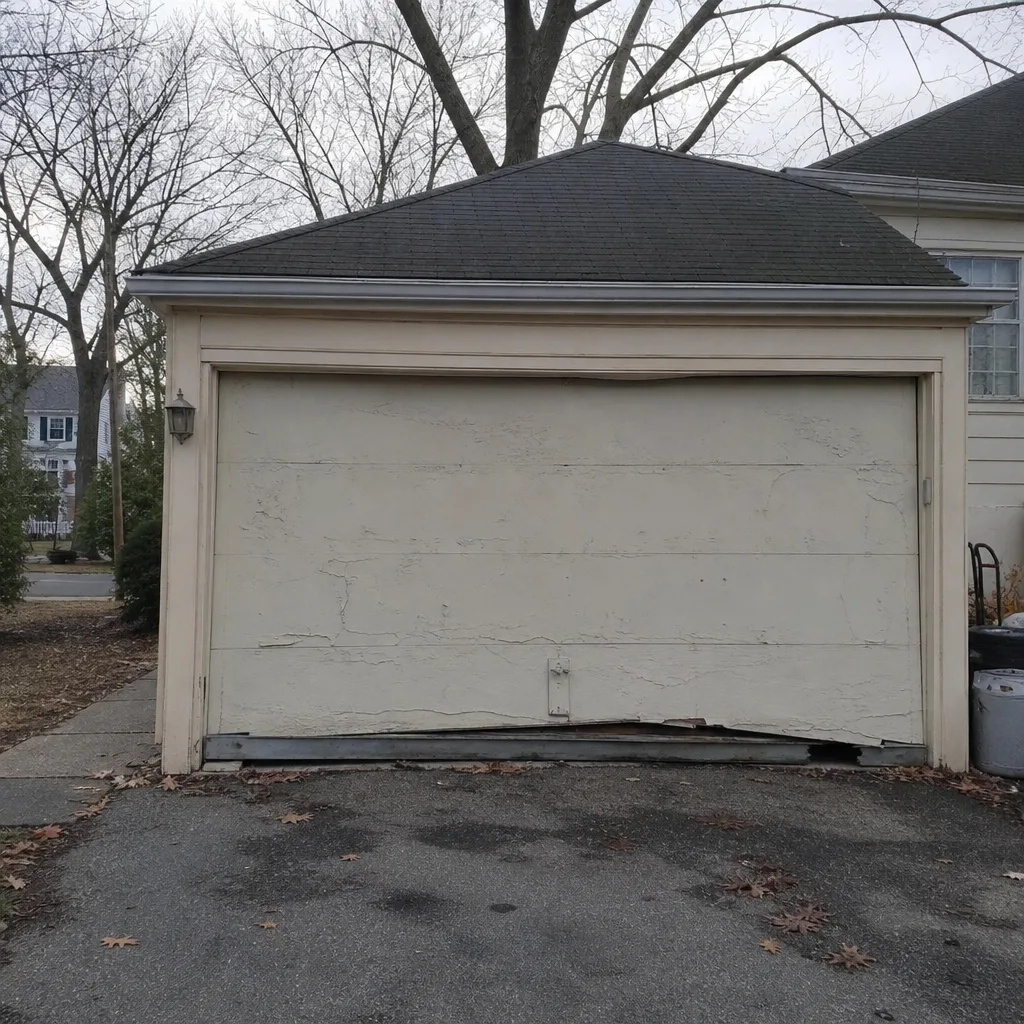 Before
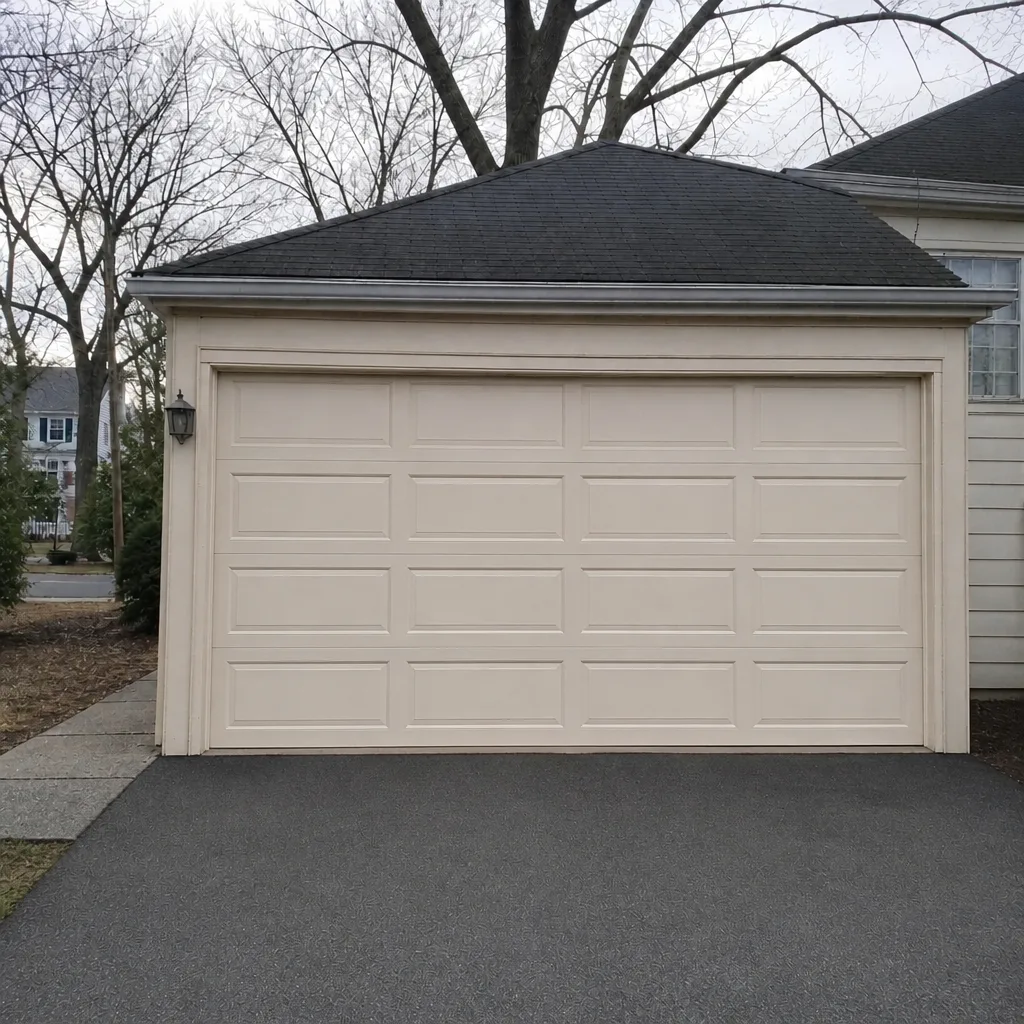 After
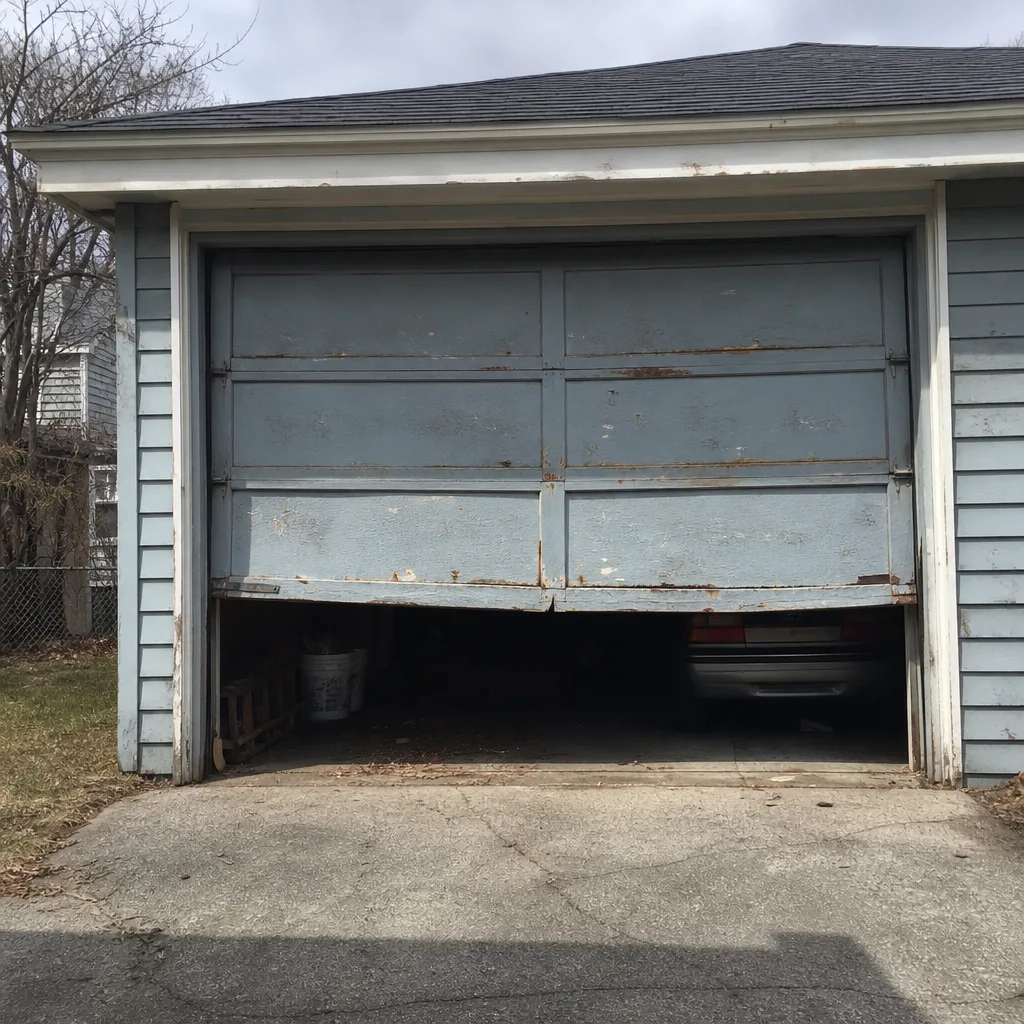 Before
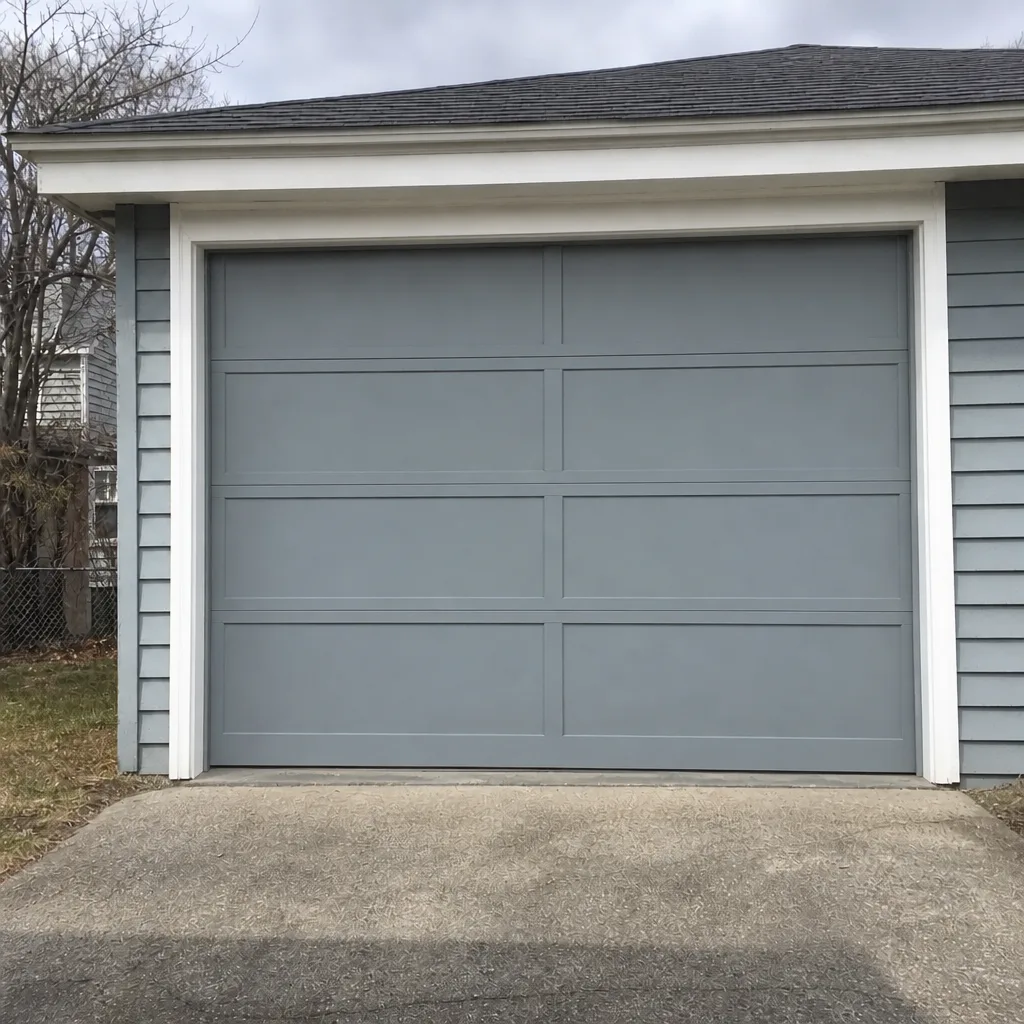 After
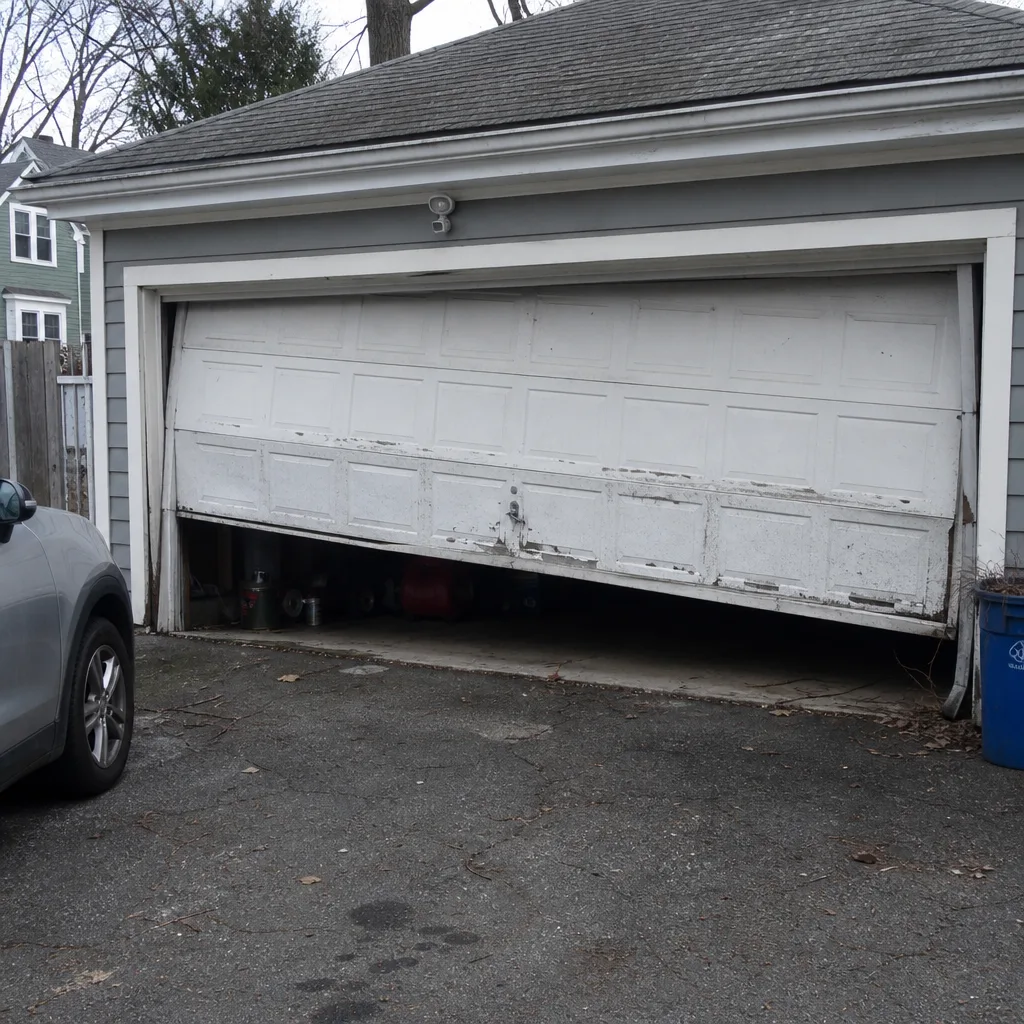 Before
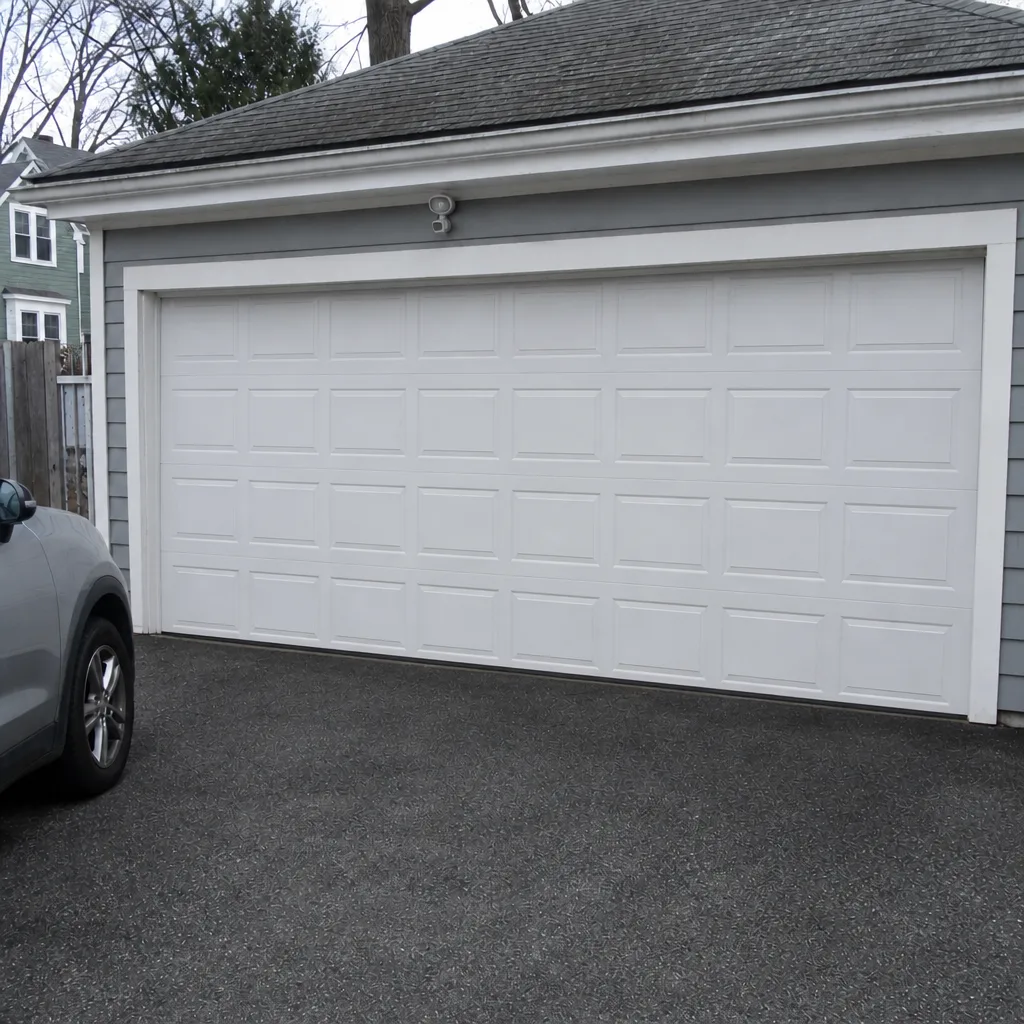 After
When to Call a Professional
Call a specialist the moment any of these is true. You hear a loud snap from the garage and the door won’t lift. The door is visibly off its tracks. The opener runs but the door doesn’t move, or the door moves but the opener doesn’t. A cable is visibly frayed or hanging. The door is stuck open and you can’t secure the house. The door reverses on its own, won’t close fully, or slams down. Any of these is a safety issue, not an inconvenience, and operating the door in that state makes it worse.
For spring and cable work specifically, the call isn’t optional. For opener failures, our garage door opener repair team can diagnose the unit, check for sensor and force faults, and confirm whether the opener needs repair or replacement. When the door itself has failed, our garage door repair specialists handle the full system. And if you’re deciding whether to repair or replace, our garage door spring repair guide explains what spring life looks like and how a written estimate handles the call.
Cambridge Garage Door Repair Pros offers free estimates in Cambridge. Call (866) 254-2156. We answer 24/7. Fast dispatch from 7am to 7pm, Sunday through Friday. Every price is quoted and agreed before any work starts, so the written estimate is the price you pay.
Frequently Asked Questions
No, not safely. A torsion spring stores enough energy to cause serious injury in a fraction of a second when improperly handled, and the winding process requires two bars, controlled sequencing, and the trained sense of resistance that comes from doing it hundreds of times. Call (866) 254-2156 for a free estimate on spring repair.
You can lubricate hinges and rollers, replace bottom weatherstripping, adjust opener travel limits, test the auto-reverse and photo-eye sensors, and visually inspect for frayed cables or bent hinges. All of these are safe and worth doing regularly. Anything involving springs, cables, drums, or track realignment on a loaded door is not DIY.
Cambridge garages tend to be narrow, often built for a single car with little side clearance. Winding a torsion spring requires swinging a winding bar through an arc, and in a tight garage that arc hits a wall, beam, or parked car. The lack of clearance makes a dangerous job more dangerous, which is why we treat spring work in Cambridge as professional-only regardless of the owner’s experience.
No. The written estimate sets the price, and we quote and agree on it before any work starts. If we discover something on site that changes the scope, we tell you before proceeding, not after. Call (866) 254-2156 for a free estimate.
The local professional who performs the work is licensed and insured as their state requires. We connect you with a vetted local specialist, and you can ask to see credentials before work begins. Estimates are free, so call (866) 254-2156 to get started.
Same-day service is often available for emergency repair calls, and we answer the phone 24/7. Fast dispatch runs from 7am to 7pm, Sunday through Friday. A call outside dispatch hours is booked into the next opening. Call (866) 254-2156 and we’ll give you a clear answer on timing.
The Bottom Line
The DIY-versus-professional question for garage doors comes down to physics, not confidence. Spring work, cable and drum work, and track realignment on a loaded door are not DIY jobs at any skill level, because the stored energy in the system doesn’t care how many videos you’ve watched. The safe list is real and worth doing: lubrication, weatherstripping, opener travel limits, safety testing, and visual inspection. Cambridge’s tight garages push several borderline jobs toward the professional side, and treating them that way is cheaper than fixing a failed attempt. Do the safe maintenance yourself, budget for the rest, and get a written estimate before anything starts. If you’re in Cambridge and unsure which side of the line your job falls on, call (866) 254-2156. We answer 24/7. Fast dispatch from 7am to 7pm, Sunday through Friday. Estimates are free, the price is agreed before work begins, and the job is done by a specialist who works on garage doors every day. For a fuller picture of our services, visit Cambridge Garage Door Repair Pros.
Written by the team at Cambridge Garage Door Repair Pros.